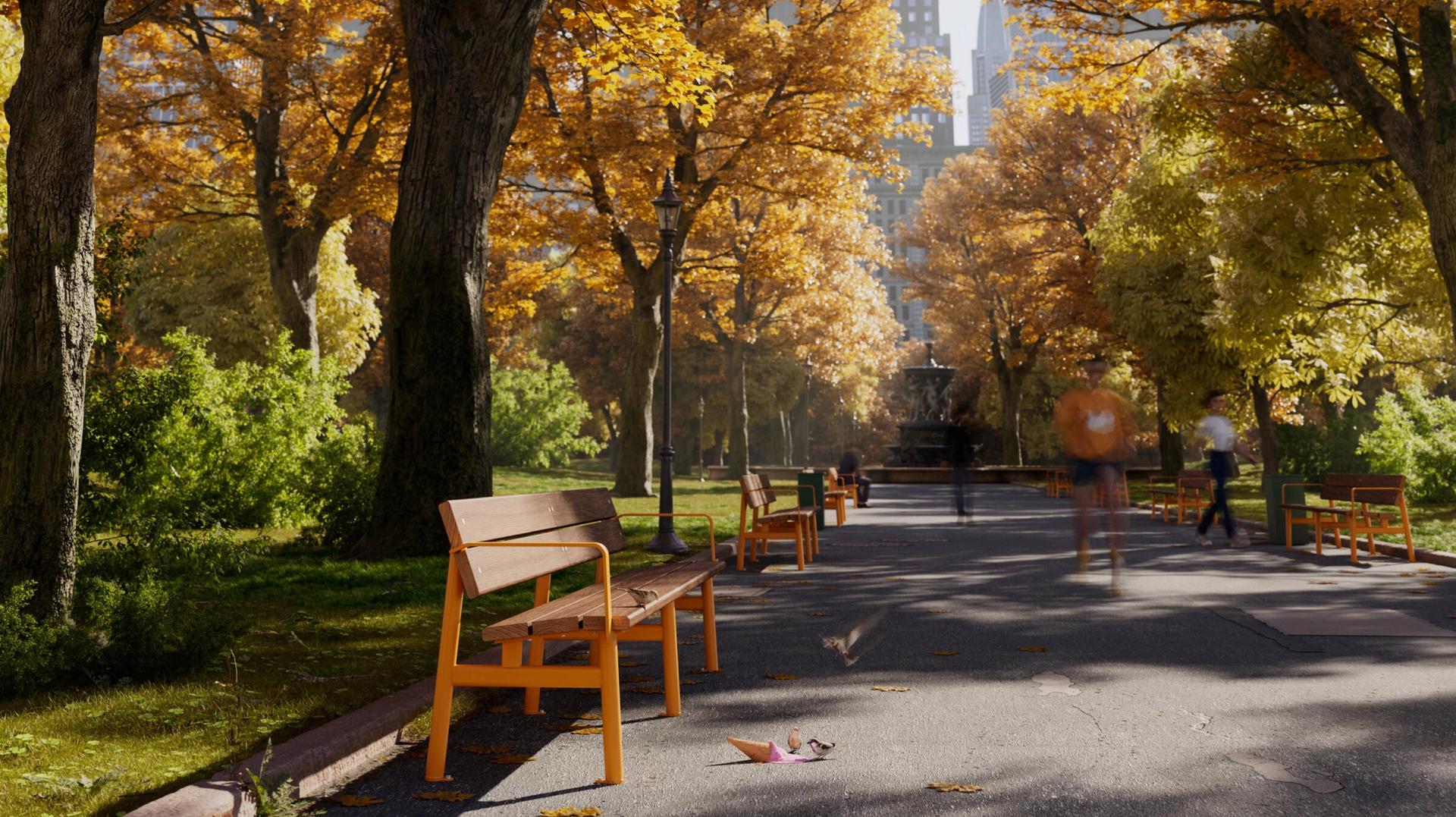
June - behind the design.
In a sped up world it’s easy to forget the slow and deliberate work that our family of designers put into each of our products. Good things take time. The June Bench is not just a bench, it's a story of a partnership that has lasted a very long time.
Design intent
Not every bench needs to raise its voice. Some are better when they wait to be found. June was imagined as one of those, rooted in timelessness, able to belong to yesterday and tomorrow at once. The idea was to make a bench that could shift shape with ease: shorter or longer, with or without armrests, higher backrests if needed. And visually, it was made to echo its surroundings, to blend in while quietly holding its own.
Inspiration
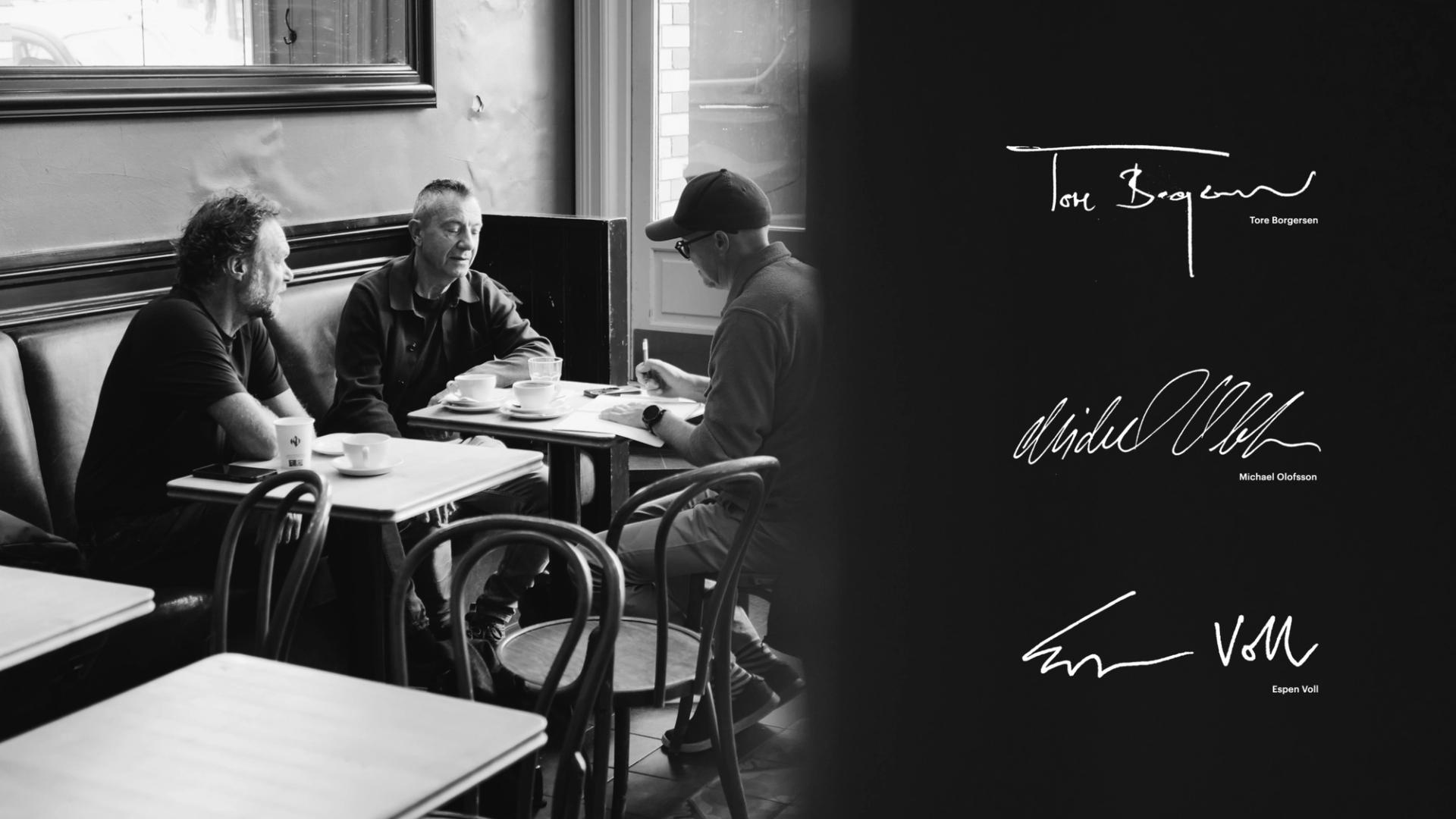
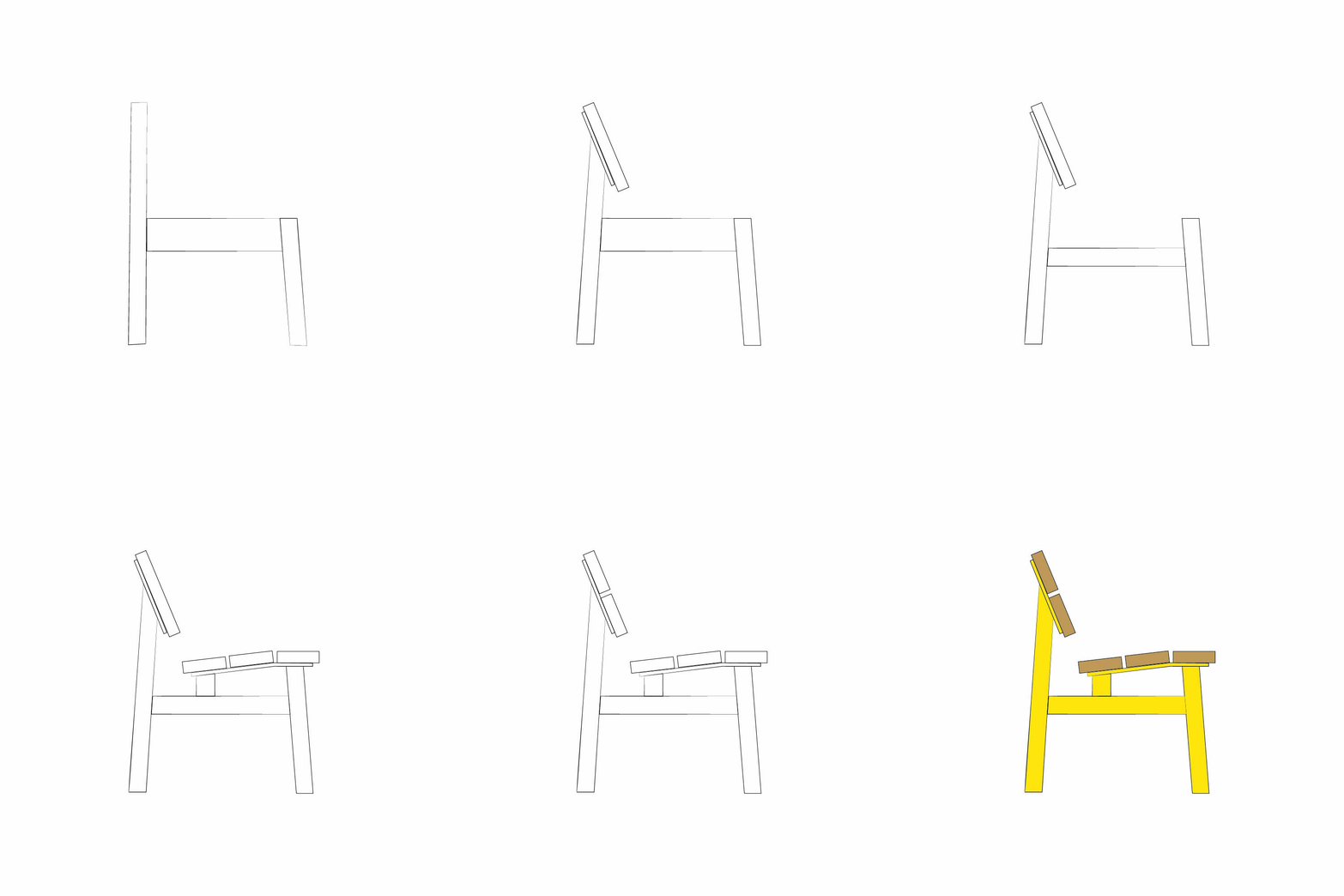
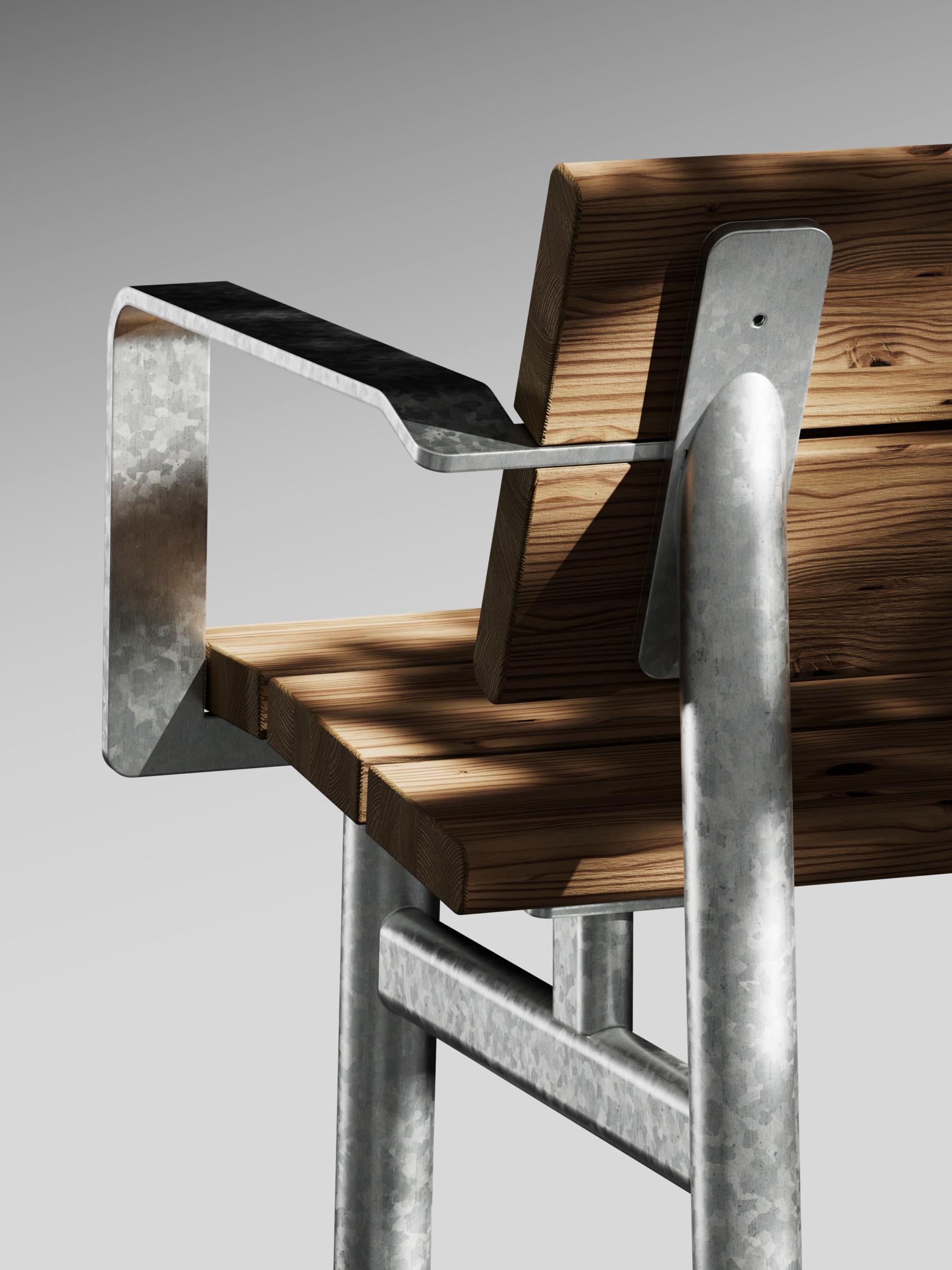
The first sketches were made at the same coffee shop where the designers have gathered for decades, spreading drawings across the table while ideas took shape. One sketch borrowed from a Scandinavian chair, where a stretcher ties the legs together for strength. That clue was carried into the side view of a bench. By lowering the stretcher, a bit of space was created under the seat, giving the construction a more architectural expression. The load reads vertically, giving June a grounded presence that recalls older forms, even ancient pillars. Comfort mattered just as much. The back and seat are tilted to invite rest, not rush. And since benches are seen from every angle, the reverse side was treated with equal care. No visible screws interrupt the surface, only a supporting rod that holds the slats like a hand.
Aesthetic
June looks familiar, almost traditional at first glance. But look closer and the details give it away: proportions tuned with care, components drawn to feel both strong and refined. That balance is what makes it work. Classic enough to feel trusted, contemporary enough to feel relevant. It is the kind of bench that does not try to impress but manages to hold attention anyway.
In a landscape
June is responsive. In historic surroundings it reads as conventional and familiar. In contemporary landscapes the sharpness of its details stands out. This makes it versatile, a bench that adapts without losing its own character. Landscape architects can place it knowing it will not fight the space but echo and enrich it.